
You cleanse every night. You use moisturizer, vitamin C, retinol and sunscreen. Yet your skin may still look dull, feel unpredictable or develop breakouts at the worst possible time.
The problem may not be that your skincare products are ineffective. They may simply be addressing only one part of a much bigger picture.
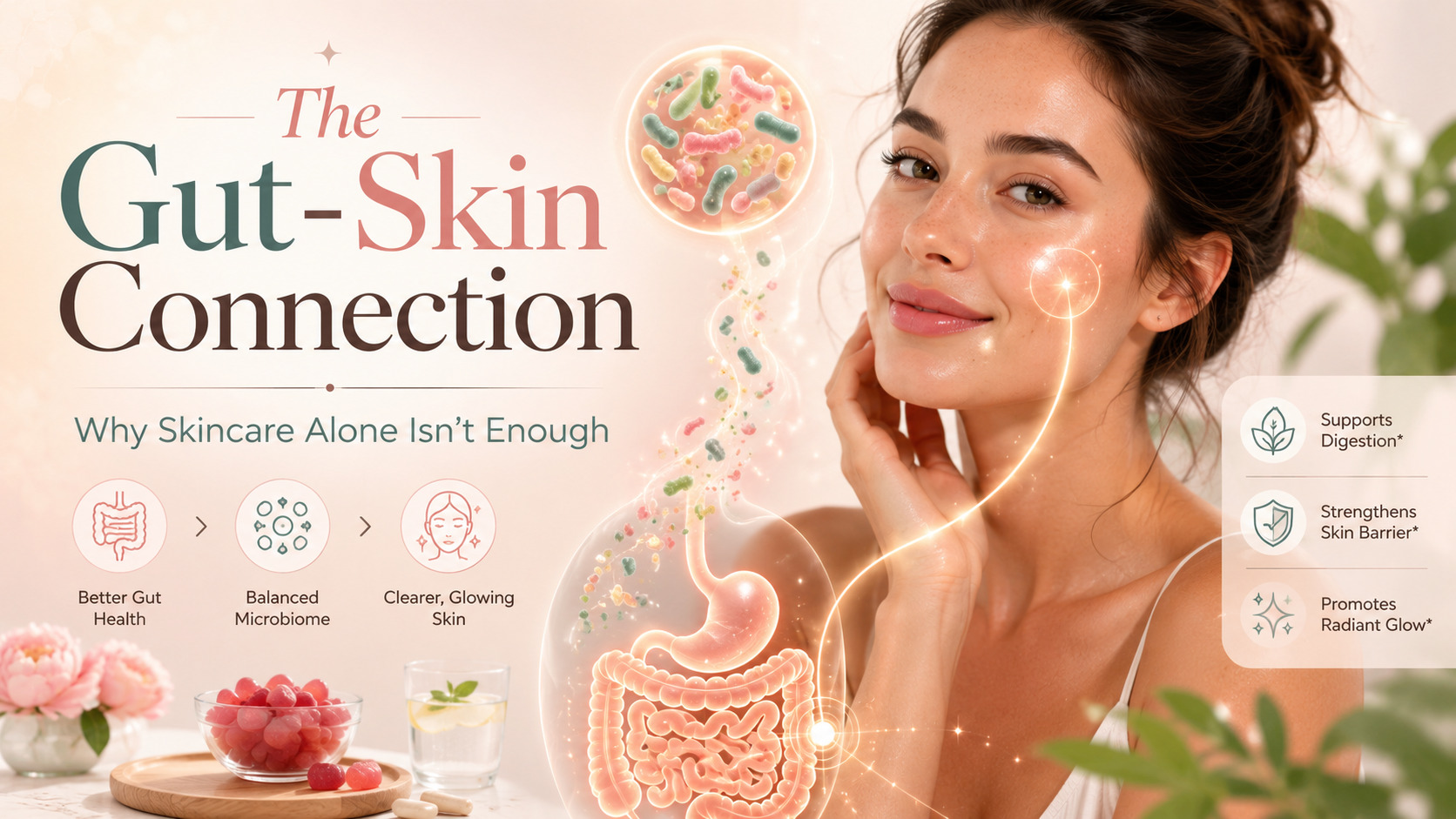
For women researching gut health supplements for glowing skin, growing interest now centers on the gut-skin axis—the communication network connecting your digestive system, immune system, microbiome and skin.
This does not mean that every pimple or wrinkle begins in your digestive tract. Skin health is influenced by many factors, including genetics, hormones, sun exposure, stress, sleep, nutrition and skincare habits. However, research increasingly suggests that the gut microbiome may also affect inflammation, immune activity and certain skin conditions.
So, should you throw away your skincare products and replace them with a probiotic gummy?
Absolutely not.
The more practical approach is to support your skin from both the outside and the inside.
Your Skin Is Not an Isolated Organ
Your skin is often treated as though it exists separately from the rest of your body. When dryness appears, you buy a richer moisturizer. When a breakout develops, you apply an acne treatment. When fine lines become visible, you add an anti-aging serum.
These products can be helpful, but topical skincare primarily works at the surface level. Your skin is also affected by internal processes involving hormones, nutrient availability, immune responses and inflammation.
The gut contains trillions of microorganisms collectively known as the gut microbiome. These microbes help interact with the immune system, process components of food and produce compounds that may influence other parts of the body. Probiotics are live microorganisms intended to support beneficial microbial communities, although their effects depend heavily on the strain, dose and individual using them.
Researchers use the term gut-skin axis to describe the two-way communication between the digestive system and the skin. When the microbiome becomes unbalanced—a state commonly called dysbiosis—it may influence inflammatory pathways and barrier function. Associations have been reported between gut-microbiome changes and conditions such as acne, psoriasis and atopic dermatitis, but researchers are still determining exactly which changes are causes, consequences or both.
What the Gut-Skin Axis Means for Women
Women frequently experience skin changes alongside shifts in stress, sleep, diet and hormones. Although these changes cannot all be blamed on the gut, the microbiome may be another piece of the puzzle.
The gut skin axis women are hearing about online involves several possible pathways:
- Gut microbes interact with the immune system.
- Microbial compounds may influence inflammatory signaling.
- The intestinal barrier helps regulate what passes from the digestive tract into circulation.
- Diet can affect both microbial diversity and skin-related metabolic processes.
- Stress can influence digestion, inflammation and skin behavior.
This means persistent skin concerns should not always be approached as purely cosmetic problems.
A woman using expensive serums while sleeping poorly, eating very little fiber, experiencing chronic digestive discomfort and frequently changing skincare products may benefit from looking at the complete pattern rather than buying another active ingredient.
Why Your Skincare Routine May Have Reached a Plateau
A skincare routine may stop delivering noticeable improvements for several reasons.
1. Acne has more than one cause
Acne develops when hair follicles become blocked with oil and dead skin cells, but hormones, inflammation, bacteria, genetics and product choices can all play a role. It is not simply a sign of dirty skin or poor digestion.
2. Too many active ingredients may irritate your skin
Using multiple exfoliating acids, strong cleansers, retinoids and acne treatments together can damage the skin barrier or increase irritation. Dermatologists generally recommend gentle cleansing and giving treatments enough time to work instead of constantly changing products.
3. Topical products cannot correct every internal influence
A moisturizer can reduce dryness, but it cannot compensate for every nutritional deficiency, medication effect, hormonal condition or inflammatory disorder.
4. Skin cell turnover naturally changes
Skin cell turnover is the process through which older cells are shed and replaced. It plays an important role in skin texture and appearance. Certain topical ingredients, such as retinoids, can influence this process, but the claim that slow gut function is the single root cause of slow skin turnover is not established by current clinical evidence.
A supplement may support general wellness, but it should not be presented as a guaranteed method for reversing wrinkles, clearing acne or restoring youthful skin.
The Leaky Gut–Skin Connection: Real Science or Wellness Hype?
The phrase leaky gut skin connection appears frequently in wellness marketing, but it needs context.
Your intestinal lining is naturally semi-permeable. It allows water and nutrients to pass through while helping restrict unwanted organisms and substances. Increased intestinal permeability can occur alongside certain diseases and inflammatory conditions.
However, “leaky gut syndrome” is often used online as a broad explanation for unrelated symptoms without proper diagnosis. Cleveland Clinic describes it as a theory that increased intestinal permeability independently causes a wide range of conditions, rather than an established standalone diagnosis for every digestive or skin complaint.
There is legitimate research into intestinal barrier function, microbiome imbalance and systemic inflammation. What remains uncertain is whether a particular supplement can reliably repair the gut barrier and produce visible skin changes in everyone.
Be cautious of any product claiming that all acne, wrinkles, weight changes or digestive symptoms have one hidden cause.
Can Probiotic Gummies Support Healthier-Looking Skin?
Probiotic gummies for skin are designed to deliver selected microorganisms in a convenient format. Some products also include prebiotic fibers, which provide food for certain beneficial gut bacteria.
Research into oral probiotics and skin health is promising, but still developing. Reviews have explored their possible roles in inflammation, oxidative stress, immune regulation and skin-barrier support. Nevertheless, results vary between studies, skin conditions, probiotic strains and doses.
A probiotic that supports one digestive concern may not automatically improve acne or skin aging. The word “probiotic” describes a broad category, not one standardized ingredient.
That is why the best skin probiotics should not be chosen solely by the largest number printed on the front of the bottle.
How to Evaluate the Best Skin Probiotics
Before purchasing a probiotic or gut-skin supplement, look beyond words such as “detox,” “anti-aging” and “clinically inspired.”
Look for an identified probiotic
The label should clearly identify the microorganism being used. Frequently studied probiotic groups include certain Lactobacillus, Bifidobacterium and Bacillus strains, but different strains can have different effects.
Check whether the amount is guaranteed through expiration
A high microorganism count at manufacturing does not necessarily mean the same number will remain viable until the end of the product’s shelf life.
Review the entire ingredient list
Gummies can contain sweeteners, flavorings, herbs, mushrooms and prebiotic fibers. Natural ingredients can still cause side effects or interact with medications.
Consider prebiotic support
Ingredients such as inulin are prebiotic fibers. They may support selected gut microbes, but larger amounts can also cause bloating, gas, abdominal discomfort or diarrhea in sensitive users.
Prefer transparent quality testing
Look for clear manufacturing information and independent testing where available. Remember that dietary supplements are not approved by the FDA for safety and effectiveness before being sold in the same way prescription drugs are.
Avoid guaranteed outcomes
No responsible supplement company can guarantee clear skin, wrinkle removal or permanent digestive improvement for every customer.
Where Neotonics Fits Into the Gut-Skin Conversation
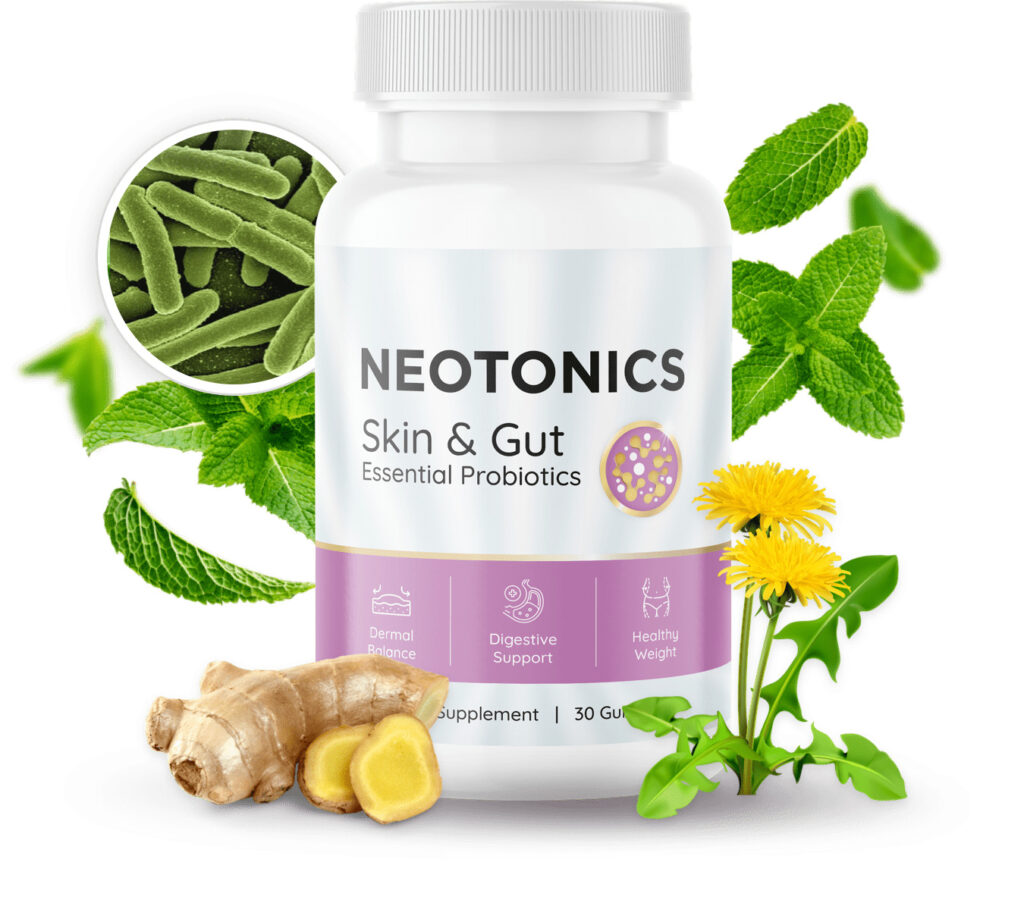
Neotonics is marketed as a once-daily probiotic gummy designed to support both skin and digestive wellness.
According to the manufacturer, each gummy includes 500 million units of Bacillus coagulans, together with ingredients such as inulin, dandelion, babchi, fenugreek, lemon balm, ginger, slippery elm bark, lion’s mane and fennel. The manufacturer recommends taking one gummy per day and currently advertises a 60-day money-back guarantee.
What makes the formula interesting
Neotonics combines three popular wellness categories:
- A probiotic microorganism
- Prebiotic fiber
- Botanical and mushroom ingredients
This makes it different from a basic probiotic supplement containing only one or two bacterial strains.
The Bacillus coagulans species has been studied primarily for digestive applications, including bowel regularity and certain symptoms associated with irritable bowel syndrome. That does not automatically prove that the finished Neotonics formula reduces wrinkles or treats acne, since research on an individual ingredient is not the same as clinical testing of the complete commercial product.
What shoppers should keep in mind
The product page uses strong language about skin aging, digestion and the microbiome. These statements should be understood as manufacturer claims rather than guaranteed medical outcomes.
Neotonics may appeal to women who:
- Prefer gummies instead of capsules
- Want a product combining a probiotic, prebiotic and botanicals
- Are building an inside-out wellness routine
- Understand that results vary
- Have reviewed the ingredient list for potential sensitivities
It should not replace sunscreen, prescribed treatment, a dermatologist’s advice or medical care for ongoing digestive symptoms.
What Women Are Doing Instead of Relying Only on Skincare
The newer approach is not “supplements instead of skincare.” It is a consistent routine that supports multiple aspects of health.
1. Keeping skincare simple
A basic routine can include:
- A gentle cleanser
- A suitable moisturizer
- Broad-spectrum sunscreen
- One targeted treatment selected for the individual concern
Using more products does not always produce better results.
2. Eating more microbiome-supporting foods
A varied diet containing vegetables, fruits, legumes, whole grains, nuts and seeds provides different forms of fiber. Fermented foods such as yogurt, kefir, kimchi and sauerkraut may also contain beneficial microbes when they include live cultures.
3. Reducing highly processed foods
A consistently low-fiber diet dominated by heavily processed foods may not support the same microbial diversity as a varied whole-food diet.
There is no need for extreme detox plans. Sustainable dietary improvements are more useful than short, restrictive cleanses.
4. Considering a targeted supplement
A probiotic or gut-skin supplement may be considered when the ingredient profile, dosage and intended purpose make sense for the individual.
The supplement should complement—not replace—nutrition, sleep, movement and appropriate skincare.
5. Tracking personal responses
Skin and digestive changes can be gradual and influenced by several variables. Consider documenting:
- Breakout frequency
- Bloating or digestive discomfort
- Bowel regularity
- Menstrual-cycle timing
- New skincare products
- Dietary changes
- Supplement use
- Stress and sleep patterns
Change one major factor at a time whenever possible. Otherwise, it becomes difficult to identify what helped or caused a reaction.
6. Protecting the skin from ultraviolet damage
No anti-aging gut health strategy can replace daily sun protection. Consistent sunscreen use remains one of the most important ways to reduce premature visible skin aging.
7. Getting professional help when needed
Persistent, painful or scarring acne deserves professional treatment. Dermatologists can distinguish acne from other skin conditions and recommend evidence-based topical or oral therapies.
Recurring abdominal pain, blood in the stool, unexplained weight changes, persistent diarrhea or severe constipation should also be evaluated by a qualified healthcare professional.
Microbiome and Acne: What We Know So Far
The relationship between the microbiome and acne is an active area of research.
Acne is a complex inflammatory condition involving oil production, follicular blockage, immune activity, hormones and microorganisms living on the skin. Researchers are also investigating whether gut-microbiome differences contribute to inflammation or influence responses to treatment.
Some studies suggest probiotics may eventually have a role as an additional strategy for certain people. However, oral probiotics are not currently a universal replacement for established acne treatments.
A practical approach is to combine acne-friendly skincare, appropriate medical treatment and healthy lifestyle habits rather than expecting one gummy to solve every contributing factor.
The Bottom Line
Your skincare routine still matters. Cleansing gently, moisturizing appropriately, using sunscreen and treating specific conditions remain important.
But your skin also reflects a broader biological system.
The gut-skin axis offers a useful way to think about the relationship between nutrition, microbial balance, immune activity, stress and skin health. Research is encouraging, but it does not prove that one probiotic gummy will give every woman clear, younger-looking skin.
Neotonics brings together Bacillus coagulans, prebiotic fiber and botanical ingredients in a convenient daily gummy. It may suit women interested in adding gut support to a broader wellness routine, provided they understand the limitations, review the ingredients and seek medical guidance when appropriate.
The most realistic strategy is not skincare or gut health.
It is thoughtful skincare, balanced nutrition, healthy lifestyle habits and carefully selected supplements working together.
Ready to learn more about Neotonics?
[Visit the official Neotonics offer page]
Frequently Asked Questions
Can gut health supplements really make your skin glow?
Some gut-health supplements may support digestion or microbial balance, which could indirectly influence inflammation and skin health. However, visible results are not guaranteed, and evidence for specific skin benefits varies by probiotic strain and product.
Are probiotic gummies good for acne?
Research into probiotics and acne is promising but incomplete. Probiotic gummies should not replace proven acne treatments or advice from a dermatologist, especially when acne is painful, persistent or causing scars.
What are the best skin probiotics?
There is no single best probiotic for everyone. Look for a clearly identified strain, transparent dosage, viability information, quality testing and ingredients suited to your individual health needs.
Is Neotonics a probiotic?
The manufacturer describes Neotonics as a probiotic gummy containing Bacillus coagulans, prebiotic inulin and a blend of botanical ingredients.
Does Neotonics remove wrinkles?
The manufacturer markets Neotonics for skin and gut support, but the product should not be described as clinically proven to remove wrinkles unless controlled clinical trials on the complete formula substantiate that outcome. Individual experiences can differ.
Can Neotonics replace my skincare routine?
No. A supplement does not replace sunscreen, moisturizer, acne treatment or medical skincare. It should only be considered one optional component of a wider wellness routine.
How long do skin probiotics take to work?
There is no universal timeline. Effects depend on the strain, dose, diet, existing microbiome, health status and intended outcome. Stop using a product and seek professional advice if you experience a concerning reaction.
Medical disclaimer: This content is for informational purposes only and is not medical advice. Dietary supplements are not intended to diagnose, treat, cure or prevent disease. Consult a qualified healthcare professional before beginning a supplement, particularly if you are pregnant, breastfeeding, taking medication or managing a medical condition.